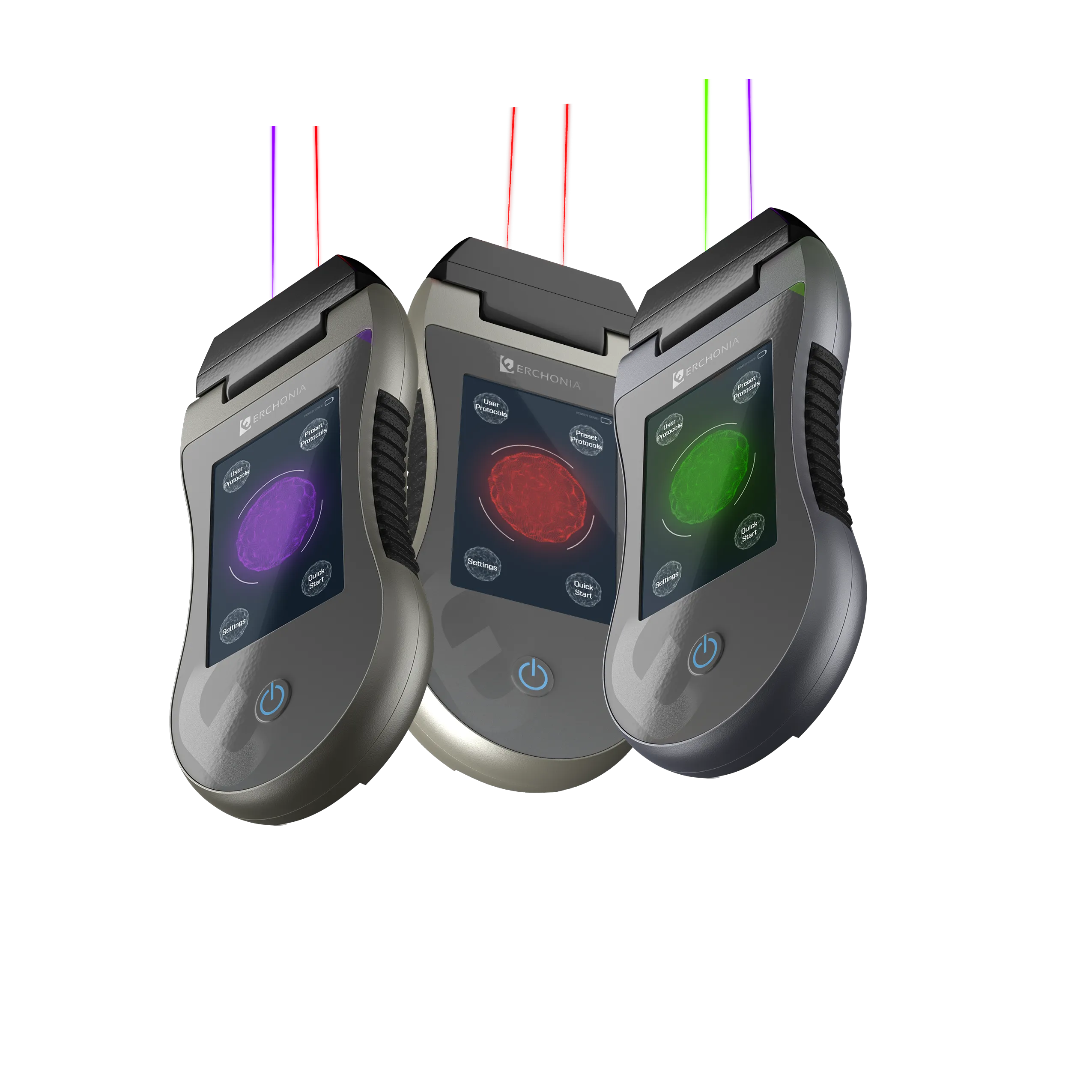
Low Level Laser Therapy
Updated for new clinical insights and recent evidence reviews.
The human body uses light-induced photochemical reactions on a daily basis. From the photosensitive cells in our eyes to the light-reliant vitamin D synthesis process in our skin, our bodies rely on and can use light in numerous ways. It stands to reason, then, that many cells in the human body may react to light. So how does light affect cells in the body, and how can it be used for the benefit of human health? That is the question behind the treatment method known as low-level laser therapy or photobiomodulation.
If you’ve been searching for non-drug options to help manage pain, you’ve probably seen terms like low-level laser therapy (LLLT), cold laser therapy, or photobiomodulation. They’re often used interchangeably, and they all point to the same idea: using specific wavelengths of light to support the body’s natural healing and recovery processes.
In this updated research overview, we’ll walk through:
Key takeaways
What Is Low-Level Laser Light Therapy (LLLT)?
Low-level laser therapy is known by several names. Most commonly, it is known as photobiomodulation therapy, low-power laser therapy, cold laser therapy or simply by the acronyms LLLT or PBMT.
Low-level laser therapy is a type of light therapy that typically uses red or near‑infrared wavelengths at low power levels. You may also hear it called photobiomodulation (PBM) because it’s designed to influence (“modulate”) biological processes, without generating significant heat.
In everyday terms: a clinician applies light to targeted tissues, and the goal is to help the body respond by reducing pain signals, calming inflammation, and supporting tissue repair.
LLLT vs. “cold laser” vs. photobiomodulation
These names are commonly used to describe the same family of therapies. “Cold laser” is a popular phrase because the treatment is non-thermal (it doesn’t “burn” or ablate tissue). “Photobiomodulation” is the modern scientific term you’ll see in newer research.
Low-level laser therapy is a term that describes the therapeutic application of light to the body. First developed in 1967 by Endre Mester in Hungary, low-level laser therapy involves placing a light source near to or on the skin, allowing the photons to move through the tissue and interact with cells in the body. Mester first developed this method after finding that it improved hair growth and stimulated wound healing in mice. Shortly after his initial development of the treatment method, Mester explored the therapy’s ability to aid in the healing of skin ulcers in 1972.
Low-level laser treatment doesn’t involve the use of the high-powered lasers that most people are familiar with. Instead, low-level lasers, LEDs and broadband lights are used to emit red and near infra-red light with wavelengths of 632 nm to 1064 nm at 1 to 1000 mW. These low-power light sources do not generate heat, so they do not burn the skin during the therapeutic process.
Since the development of the process, the benefits of applying laser therapy treatments have been explored at length. The photochemical changes that occur in cells as a reaction to the application of light can help accelerate wound healing and tissue regeneration, increase circulation, reduce inflammation and even help manage pain.
How Does Laser Light Therapy Work?
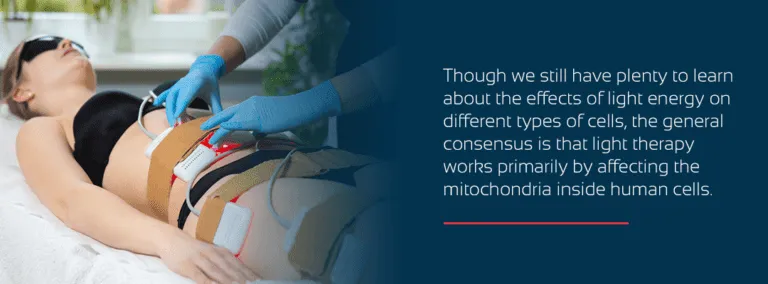
While the benefits of photobiomodulation have been observed in medical studies, the mechanisms that lead to these results are still being studied. Though we still have plenty to learn about the effects of light energy on different types of cells, the general consensus is that light therapy works primarily by affecting the mitochondria inside human cells.
The primary idea behind photobiology is that when light hits certain molecules, called chromophores, the energy of the photon causes electrons in those molecules to be excited and jump into higher-energy orbits, effectively storing energy within the molecule. The mitochondria of the cell are thought to contain such chromophores, allowing them to store more energy to be used in the biochemical processes that mitochondria complete. Mitochondria then use this energy to increase the production of essential substances in the body. The most important of these are the following:
- Adenosine Triphosphate (ATP): ATP is functionally the energy storage molecule for the human body, used in virtually all of the biochemical processes that allow us to function. This includes processes that help our bodies to grow and heal.
- Reactive Oxygen Series (ROS): ROS is a mild oxidant that is essential in the gene transcription process, which is a critical part of cellular repair and healing.
- Nitric Oxide (NO): Nitric oxide is an essential molecule in the body’s cellular communication system, helping transmit signals through the body, which can help improve overall body healing. Nitric oxide is also helpful in dilating blood vessels to improve circulation.
Several other mechanisms are likely improved through the use of laser therapy. For example, NO improves the production of cyclic guanine monophosphate, which is involved in other signaling pathways in the body. Laser therapy also improves the synthesis of DNA and RNA, which in turn promotes the production of proteins and growth factors in the body.
LLLT is still an active area of research, but the leading explanation is that certain wavelengths of light are absorbed by cells and influence pathways related to:
- Cell energy (ATP) and mitochondrial signaling
- Microcirculation and nitric oxide signaling (which may support local blood flow)
- Inflammatory mediators (helping calm inflammatory cascades)
- Neuromodulation (influencing pain signaling and sensitivity)
One widely cited overview of LLLT for musculoskeletal pain describes both short‑term effects (like neuromodulation) and longer‑term effects tied to inflammation reduction and tissue healing. In other words: the “why it helps” can look different depending on the condition and the treatment plan.
Laser Therapy Benefits
The biological processes promoted by laser therapy result in various health benefits to users, each of which has been studied at length. A few of the benefits of laser therapy are discussed in detail below:
Low-Level Laser Application Areas
While laser therapy has numerous potential benefits that are still being researched, several practical applications are already on the market. Below are a few of the more common laser applications in which Erchonia Corporation lasers specializes:
1. Chronic Low Back Pain
About 80% of adults experience low back pain at some point in their lives. Of those adults, approximately 60% are treated with opioids, despite the potential for addiction and the minimal value of opioids in long-term applications. Erchonia’s FX 635 laser showed a 72% success rate in their clinical trial, which received FDA market clearance in May 2018. The FX 635 treatment of chronic low back pain is groundbreaking in the pain management field and gives patients a safer, more effective treatment option.
Chronic low back pain is one of the most studied categories for non-pharmacologic care. A systematic review and meta-analysis of randomized controlled trials reported that pain scores after treatment were lower with LLLT compared to placebo (reported as a statistically significant reduction on VAS pain scales).
Clinical context: The American College of Physicians’ clinical practice guideline for low back pain includes low-level laser therapy among nonpharmacologic options to consider for chronic low back pain (listed alongside exercise, mindfulness-based stress reduction, tai chi, yoga, spinal manipulation, and more).
2. Neck and Shoulder Pain
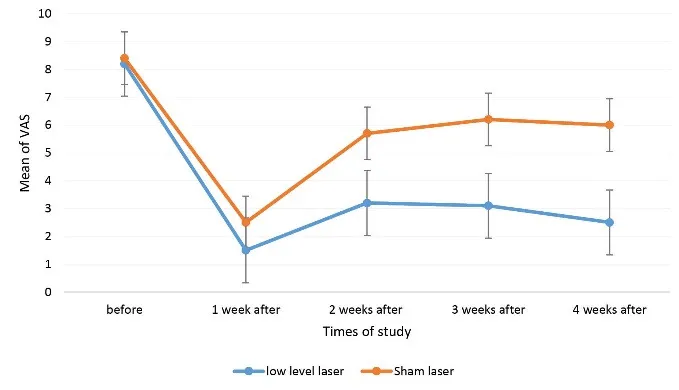
In a randomized trial in nonspecific chronic neck pain, average pain scores (VAS) decreased substantially over a four‑week treatment window in the LLLT group compared with a sham laser group.
Why this matters for readers: When people say, “I tried it and didn’t notice much,” one of the biggest variables is the protocol, wavelength, total dose, and treatment schedule.
Various low-level lasers have been shown to be effective in reducing and eliminating acute and chronic neck and shoulder pain. Many patients find that low-level lasers are more effective and work faster than traditional pain medications. Combined with physical therapy and chiropractic treatments, Erchonia lasers can help patients live a normal, healthy, active life without debilitating pain.
3. Body Contouring
Erchonia lasers are proven to target and eliminate fat in areas that are difficult to reduce with regular diet and exercise. The Zerona laser is proven to stimulate the body at a cellular level, targeting these difficult areas.
The Erchonia EML laser is approved as an addition to traditional liposuction surgery. It is the first and only low-level laser to be given FDA market clearance for use before and during liposuction treatments. The painless laser treatment is applied before liposuction to liquefy the fat, making it easier to remove during the surgery. In addition to improving surgery outcomes, the application of this low-level laser has been shown to reduce post-operative pain and bruising and decrease overall recovery time.
4. Joint pain and osteoarthritis (especially knee OA)
Knee osteoarthritis is a common driver of ongoing joint pain, stiffness, and reduced mobility. A large systematic review and meta-analysis of randomized placebo-controlled trials found that LLLT reduced pain compared with placebo at the end of therapy, with continued benefits during follow‑ups.
Important detail: In that analysis, the subgroup receiving recommended dose parameters showed greater reductions in pain than non‑recommended doses. That aligns with what clinicians often see: dose matters.
5. Tendinopathy & plantar fasciitis
Heel pain and tendon pain can be stubborn, especially when loading patterns, footwear, or training volume are part of the story.
A systematic review and meta-analysis of lower‑extremity tendinopathy and plantar fasciitis trials found that LLLT significantly reduced pain and disability in the short and medium term. The authors also emphasized that dose reporting and adherence to recommended parameters influenced confidence in outcomes.
Why interest in LLLT is growing as a non-drug option
There’s a larger shift happening in pain care: maximize nonpharmacologic and nonopioid options when appropriate. The CDC’s clinical guidance highlights that nonopioid therapies are preferred for subacute and chronic pain, and it provides examples of noninvasive, nonpharmacologic approaches, including low-level laser therapy.
More clinicians and patients are looking for tools that can be used alongside movement, rehab, and lifestyle approaches, without adding medication burden.
Pain score improvements seen in clinical studies
Study results vary by condition and protocol. Values below represent additional pain reduction vs. control groups from published research (VAS 0–10 scale).
Do Low-Level Lasers Actually Work?
Though low-level laser treatment is a relatively new field of medicine, the results speak for themselves. As the studies mentioned above show, patients recovering from injuries, surgeries and more can expect excellent results from low-level laser therapy, and people looking to improve their hair, skin and pain outcomes already have options available to them.
It is important to note, however, that low-level laser treatments may not be the best option for everyone. Pregnant women, for example, are not recommended to pursue laser therapy treatments since the effects on fetuses are not well understood. Results may also vary per person — the number of treatments needed may vary depending on the condition, the severity of this condition and the patient’s response to treatment.
Despite it being a relatively new field of study, cold lasers are still being studied at length for their potential benefits. Laser therapy applications are currently being studied for use against viruses, scars, burns, wound healing and much more. With each new revelation, Erchonia will be there. Our commitment to low-level laser treatment has made great advancements for laser technology that patients can use right now.
Expert Commentary
- “Examples of noninvasive, nonpharmacologic approaches that can be used to manage pain include… low-level laser therapy.” — CDC, Nonopioid Therapies for Pain Management (Jan 31, 2025)
- “For the treatment of chronic low back pain, physicians should select therapies that have the fewest harms and costs…” — Nitin S. Damle, MD, MS, MACP (President, American College of Physicians), ACP Newsroom (Feb 14, 2017)
- “LLLT is beneficial for pain relief and can accelerate the body’s ability to heal itself.” — Cotler et al., “The Use of Low Level Laser Therapy (LLLT) For Musculoskeletal Pain” (2015)
- “LLLT or ‘cold laser therapy’ has been widely used in pain management with proposed anti-inflammatory and analgesic effects.” — Wickenheisser et al., “Laser Light Therapy in Inflammatory, Musculoskeletal, and Autoimmune Disease” (2019)
FAQs
Erchonia Laser Uses in Medical Field
Yes, “cold laser” is a common nickname for low-level laser therapy because it’s designed to be non-thermal.
Some people report faster changes, while others notice gradual improvement over multiple sessions. The condition being treated, treatment parameters, and consistency all matter.
Research in knee osteoarthritis has shown pain reduction compared with placebo in multiple placebo‑controlled trials. Outcomes depend on dosing and the overall care plan.
LLLT is generally well tolerated, but standard precautions apply, especially around the eyes, pregnancy, and known malignancy. Always talk with a qualified clinician who can screen for contraindications.
Often, yes. Many care plans pair LLLT with exercise therapy, mobility work, lifestyle changes, or manual therapies. (For related reading, you can link to your existing Erchonia posts below.)
Let’s Talk About Your Clinic
Find the right lasers for your clinic and your patients with a dedicated laser expert